PREFACE TO THE POEMS
Fragments of Peace
There is a particular kind of courage required to gather the shards of a life and offer them, unguarded, to strangers. I have spent these years learning this courage—not as a lesson I sought, but as one delivered by circumstance, by love, by loss, by the slow and exacting education of the heart. The collection you hold—Fragments of Peace—is not merely a book of poems; it is an archive of longing, a testament to survival, and a letter pressed into the hands of time itself.
The title performs a necessary paradox. Fragments: what remains when peace has not yet arrived—the pieces of fatherhood scattered across marital bridges burned too soon, the echoes of children whose faces exist now only in portraits and memory, the shards of a self-broken and reassembled again and again in the alchemy of language. Peace: that which I ache for, pray for, write toward across sleepless hours and impossible distances. And between these two poles—the hoped-for wholeness and the lived reality of fracture—these poems make their dwelling.
I write with my body, with the weight of absence pressing against my ribs. My dedications announce the stakes: my daughters whose names read like incantations—Chionye Chisimdiri Chimamanda, Mmasichi Kambili Udochi, Esomchi Chidera Ihuoma—and a son, Sobeife Chidebem, whose presence haunts these pages like a question mark. They are not abstract muses; they are children separated from their father by circumstances that poems cannot fully mend but must, nevertheless, attempt to hold.
In these pages, I have refused to look away. I have stared directly into the wound of estranged fatherhood and written from within that wound. The result is poetry that bleeds authenticity—unflinching in its examination of loss, yet I hope, remarkably free of self-pity. When I write, in Failed State, of scrolling through Facebook and encountering another mother's birthday wishes for her son, of the tears that find their routes unbidden, I am reaching toward something universally human, rendered with devastating particularity.
This collection's tripartite structure mirrors my own navigation between worlds. Fragment One establishes the primary terrain: the broken family, the children held only in photographs, the midnight hours when grief becomes language. Poems like "3.50AM, 04/10/2024" and "13th OCTOBER" pulse with the specific ache of dates marked and remembered—the anniversaries of separation, the birthdays celebrated in isolation. Here, time itself becomes a character, both enemy and reluctant ally.
Fragment Two widens the aperture. I turn inward, examining not only loss but the very instrument through which loss is rendered—poetry itself. "SOUL" announces itself as manifesto: I do not come here / To win you awards. / I come here perchance / To view my world / With words crashing. This is poetry as survival mechanism, as breathing apparatus, as the only available architecture for a life that refuses to cohere.
Fragment Three returns me to origin, to the father who carried pictures to shed his grief, to the mother whose heaven became cloudy with little rain. The collection circles back, as grief always does, to the sources of love and loss, tracing how the wounds of one generation become the language of the next.
Throughout, I have attempted a sophisticated command of poetic craft. My lines move between compression and expansion, between the aphoristic punch of "What is love, if it can be broken like an egg?" and the patient, almost prose-like unfolding of poems. I have tried to remain unafraid of vulnerability, of naming names, of situating personal catastrophe within broader contexts of emotional fracture—not as a display, but as a necessity.
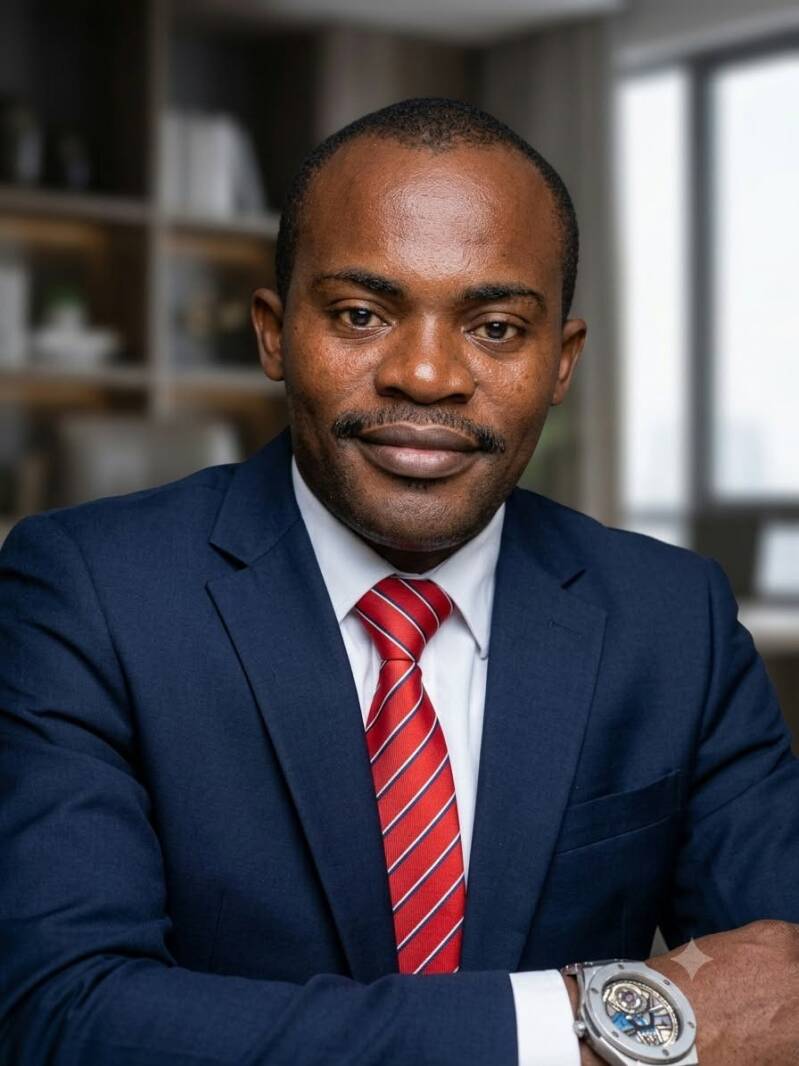
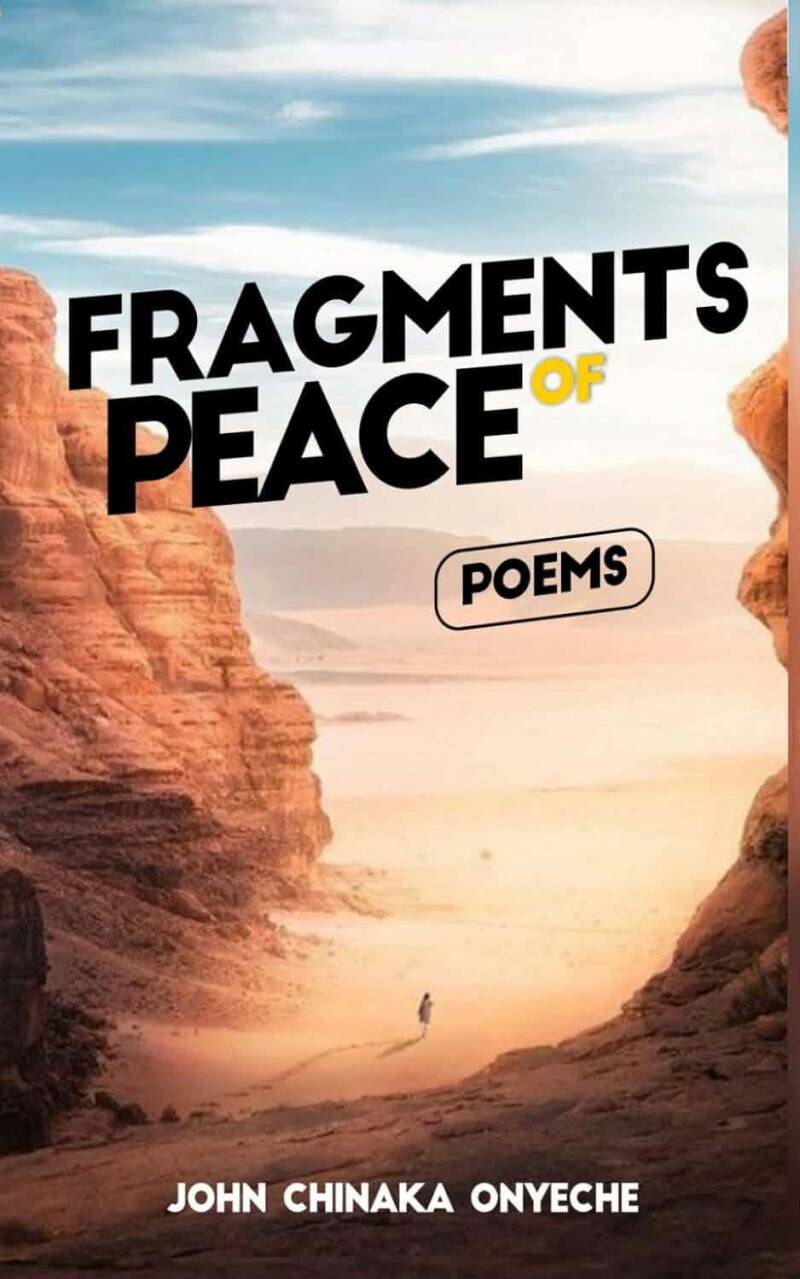
The epigraphs that precede these poems—from Duras, Francisco, Chiwenite—function as more than decoration. They are fellow travelers, voices that accompany me through my dark nights. Duras reminds us that writing "isn't just telling stories… it's telling everything all at once." Francisco offers the image of grinding oneself into sand, offering the grain of self to anyone willing to listen. Chiwenite's prayer—"My God. Give me water & take the fame"—captures this collection's deepest aspiration: not recognition, but sustenance; not applause, but the simple, impossible gift of connection.
What emerges from these pages is a portrait of a man learning, in real time, to live with irreconcilable tensions: the love that persists alongside separation, the fatherhood that continues even when fathering is prohibited, the hope that flickers despite overwhelming evidence for despair. These poems do not offer resolution. They offer something rarer and more valuable—testimony.
In an era of poetry that often contents itself with the merely confessional or the safely aesthetic, I hope my work reminds us of the form's oldest purposes: to mourn, to praise, to question, to bear witness. Fragments of Peace is a book written at the edge of what can be said, reaching toward what can only be gestured at—the face of a child one may never hold again, the love that persists beyond every attempt to kill it.
I invite you to read these poems, then. Let them work on you. Let them break your heart and, in the breaking, open it to the strange, difficult beauty of a man who has refused to stop reaching across the fragments toward peace.